
09 Mar How CNC Machining and 3D Printing Work Together in Hybrid Production Environments
Modern manufacturing rarely relies on a single technology. Instead, many advanced facilities combine multiple processes to maximize precision, efficiency, and flexibility. One of the most powerful combinations today is the integration of CNC machining with 3D printing, creating what is known as hybrid manufacturing.
By blending additive manufacturing and subtractive manufacturing, manufacturers can move efficiently from concept to production while maintaining tight tolerances and reducing costs. This hybrid approach enables companies to prototype quickly, refine designs, and produce production-ready parts faster than traditional workflows.
Understanding the Two Core Technologies
Additive Manufacturing (3D Printing)
3D printing, also called additive manufacturing, builds components layer by layer from digital designs. Instead of cutting material away, the process gradually builds material until the part takes shape.
Key advantages include:
- Ability to create complex internal geometries
- Efficient material usage with minimal waste
- Faster rapid prototyping to production scaling
- Lower cost for low-volume or custom components
However, while additive processes are excellent for complex shapes and rapid design iteration, they often require additional finishing to achieve high surface quality or extremely tight tolerances.
Subtractive Manufacturing (CNC Machining)
CNC machining represents the opposite manufacturing approach. Instead of building material, subtractive manufacturing removes material from a solid block using computer-controlled precise cutting tools such as mills, lathes, or routers.
This process is known for:
- Extremely tight tolerance post-processing
- Superior surface finishes
- High repeatability
- Compatibility with many metals and engineering plastics
The limitation is that machining complex internal geometries or intricate shapes can be difficult or expensive.
What Is Hybrid Manufacturing?
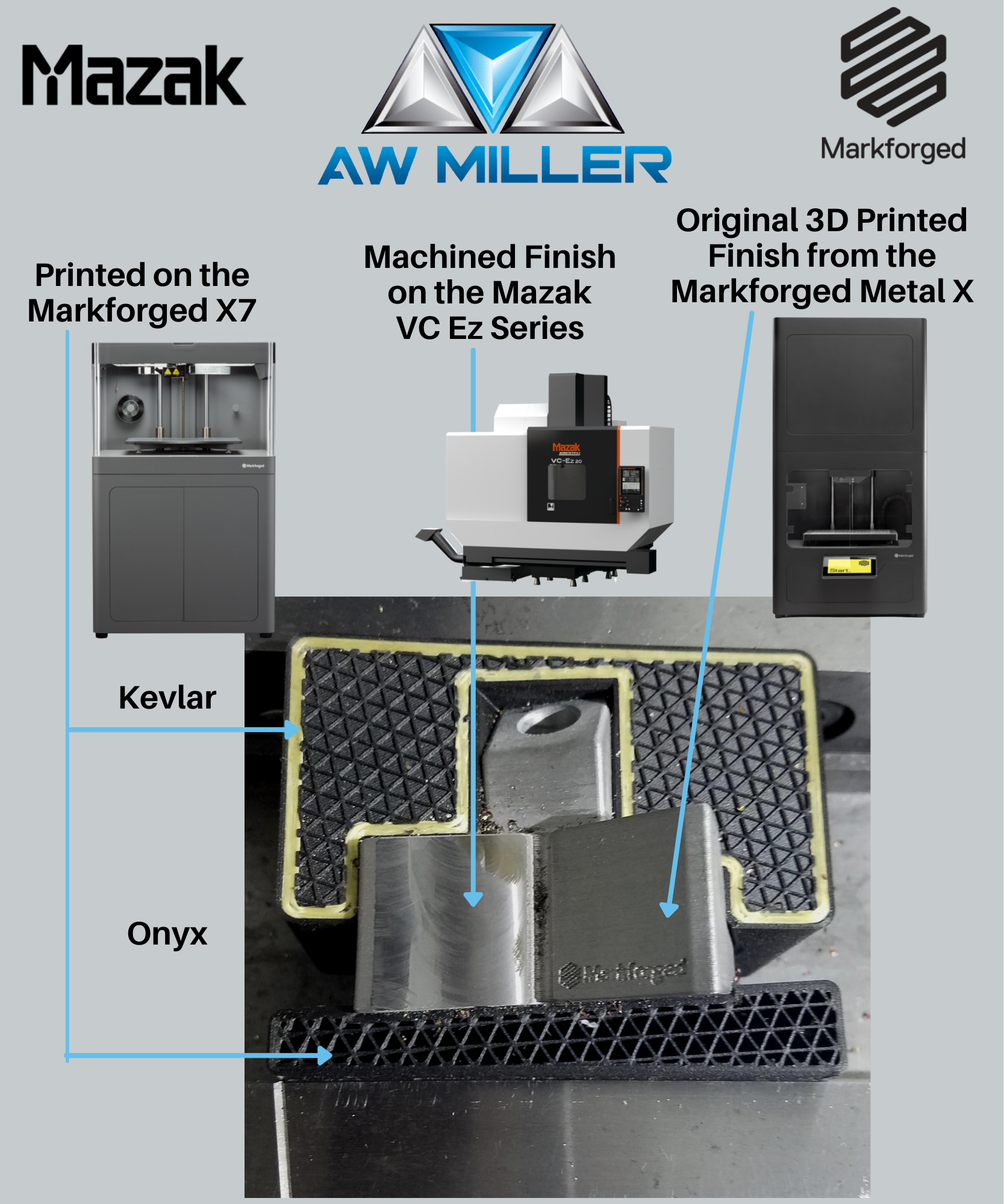
Hybrid manufacturing merges the advantages of both processes. A part may begin with additive manufacturing and then move into precision machining, or both processes may occur within the same machine setup.
In many hybrid systems:
- 3D printing builds a near-net shape part
- CNC machining refines surfaces and features
- The finished component meets production-level specifications
This CNC machining and 3D printing integration allows manufacturers to produce parts that would be difficult or inefficient using only one technology.
Some modern machines even combine both functions on a single platform, enabling additive and subtractive operations without removing the part from the fixture.
The Hybrid Production Manufacturing Process
A typical hybrid production manufacturing process follows a series of coordinated steps.
1. Digital Design and Engineering
Engineers create a CAD model that defines the part’s geometry, tolerances, and materials. Software determines which features should be printed and which should be machined.
This early planning ensures an efficient production-ready additive workflow.
2. Additive Manufacturing for Near-Net Shapes
The process begins with 3D printing, where the bulk geometry of the component is produced.
Benefits at this stage include:
- Rapid iteration during design development
- Creation of complex internal structures
- Reduced material waste
- Lower reduced tooling costs
Because the part is printed close to its final shape, the amount of machining required later is minimized.
3. CNC Machining for Precision Finishing
Once the additive stage is complete, CNC machining takes over to refine the part.
Typical machining operations include:
- Precision milling
- Surface finishing
- Hole drilling and tapping
- Threading and tolerance adjustments
This stage ensures tight tolerance post-processing, delivering the accuracy and surface quality required for production components.
Advantages of CNC Machining and 3D Printing Integration
Combining these technologies offers significant advantages compared to using either method alone.
Faster Product Development
Hybrid workflows allow engineers to move quickly from rapid prototyping to production scaling, dramatically reducing development timelines.
Greater Design Freedom
Because additive manufacturing handles complex shapes and internal channels, designers are not constrained by traditional machining limitations.
Reduced Material Waste
Additive manufacturing builds only what is needed, reducing waste compared to machining large blocks of material.
Lower Tooling Costs
Hybrid workflows can eliminate or minimize expensive tooling and molds, especially for low-to-medium production volumes.
Improved Precision
CNC machining ensures that the final part meets strict dimensional tolerances and surface requirements.
Real-World Applications
Hybrid manufacturing is widely used in industries where both precision and design complexity matter.
Common applications include:
- Aerospace components
- Medical implants
- Energy sector equipment
- Industrial machinery parts
- Custom tooling and fixtures
In these environments, 3D printing enables complex designs while CNC machining ensures reliability and durability.
The Future of Hybrid Production
As manufacturing technologies continue evolving, hybrid systems are becoming more sophisticated. New machines can alternate between additive deposition and CNC finishing in the same setup, eliminating re-clamping and improving accuracy.
Future advancements may include:
- Multi-material additive systems
- AI-driven process optimization
- Integrated real-time quality monitoring
- Fully automated hybrid production cells
These developments will further strengthen the role of hybrid manufacturing in modern production environments.
Conclusion
The integration of CNC machining and 3D printing is transforming how manufacturers design and produce parts. By combining additive manufacturing with subtractive manufacturing, companies can create complex components quickly while still achieving the precision and surface quality required for production.
This hybrid production manufacturing process enables faster development cycles, lower tooling costs, and highly accurate parts. As production-ready additive workflows continue to mature, the collaboration between CNC machining and 3D printing will become an increasingly important strategy for modern manufacturing.
Contact A.W. Miller today to learn how hybrid manufacturing solutions can support your production goals.
Sorry, the comment form is closed at this time.