Job Shop Manufacturing Solutions for CNC
and Industrial 3D Printing

CNC Machining Solutions for High-Mix Job Shops

Job shops operate in environments where part variety is constant and lead times are tight, so CNC equipment must balance flexibility, speed, and accuracy without adding operational complexity. Advanced vertical and horizontal machining centers provide the rigidity and thermal stability required for consistent precision, while multi-axis configurations reduce secondary operations and minimize setup time. As part geometries become more complex, integrated probing and in-process measurement maintain dimensional control, and high-speed spindles paired with rapid tool changers keep cycle times competitive. With pallet systems and robotic loading options available, spindle utilization increases significantly, allowing shops to expand output without increasing headcount or floor space.

Multi-Tasking and 5-Axis Capability for Complex Components

When parts demand multiple operations, consolidating processes into a single platform improves both accuracy and efficiency. Multi-tasking and 5-axis CNC machines combine milling and turning capabilities, reducing handling and eliminating alignment errors between setups. This streamlined workflow not only protects tight tolerances but also shortens overall production time. Advanced control systems simplify programming for intricate features, and seamless CAM integration supports faster revisions when engineering changes arise. As a result, job shops gain the confidence to quote complex aerospace, medical, and energy components while maintaining control over cost, quality, and delivery performance.
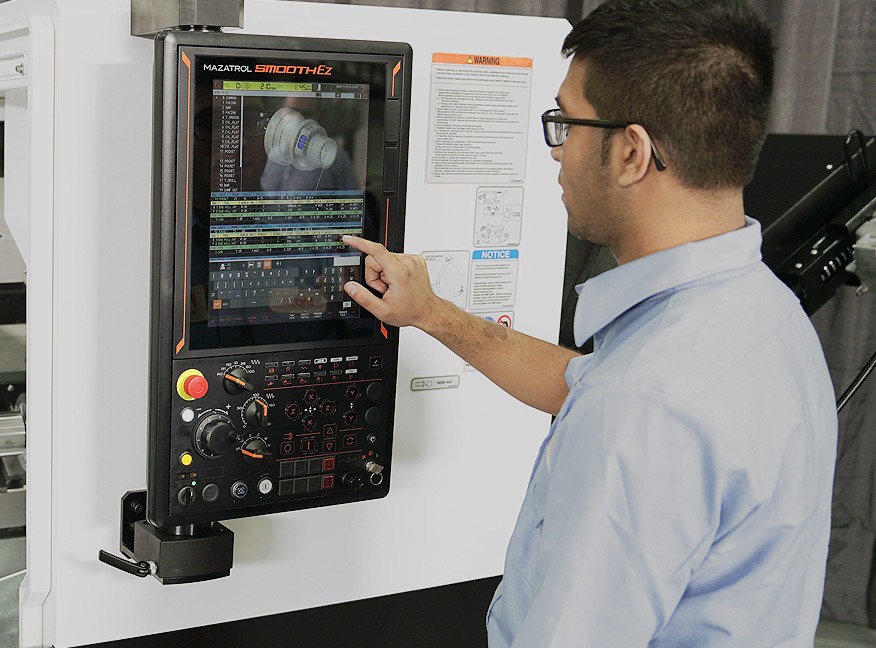
Mazak Engineer working in a job shop on the Ez series

Ez Series Performance with Build Your Own Ez Flexibility

The Ez Series offers practical, production-ready machining solutions designed specifically for job shops seeking reliable performance without unnecessary complexity. Built with the same engineering standards as higher-tier platforms, these machines deliver consistent accuracy, intuitive controls, and a compact footprint that fits seamlessly into existing layouts. What sets the platform apart is the ability to tailor specifications through the Build Your Own Ez configuration tool, which allows shops to select spindle options, tooling capacity, and automation features that align directly with their workload. This structured customization ensures the investment matches real production demands, creating a scalable path for growth as customer requirements evolve.

The Role of 3D Printing in Aerospace Manufacturing

3D printing in aerospace is an essential tool in manufacturing aircraft components, not as a replacement for CNC manufacturing, but as a powerful complement that expands design freedom and speeds up development. With the ability to print complex geometries—like internal channels, lattice structures, and organic forms—engineers can now create lightweight, high-strength parts that were once impossible to produce. For example, this capability is particularly valuable in applications such as jet engines and satellite components, where every gram matters. As a result, the integration of 3D printing with CAD-driven workflows, allows aerospace teams to quickly iterate, validate, and produce functional parts that meet demanding performance requirements without compromising on weight or durability.

Industrial 3D Printing for Tooling, Fixtures, and Shop Efficiency

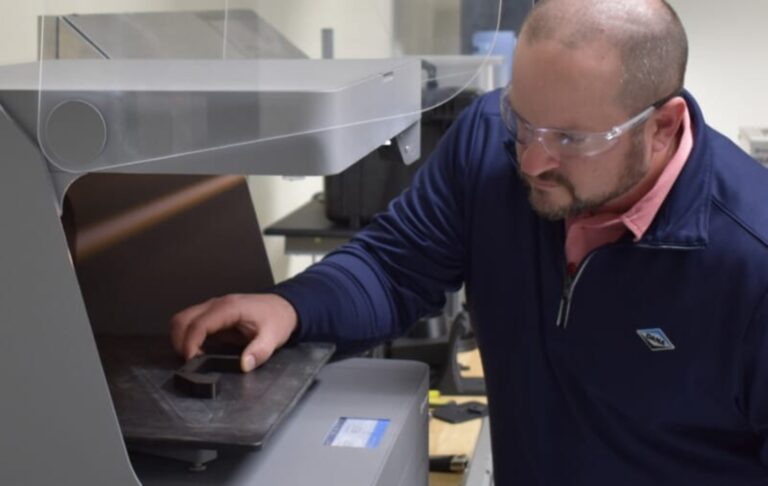
Industrial 3D printing introduces a new level of responsiveness to job shop operations, particularly when producing custom fixtures, soft jaws, gauges, and assembly aids. Instead of tying up CNC capacity for non-revenue tooling work, shops can manufacture durable composite tools in-house and deploy them quickly on the floor. Reinforced materials provide the strength needed for machining environments, while rapid iteration supports continuous improvement in part holding and inspection processes. By shifting appropriate tooling applications to additive manufacturing, shops reduce lead times, lower material consumption, and free machining centers for higher-value production.

Additive Manufacturing for Prototyping and Low-Volume Production

Beyond tooling applications, industrial 3D printing supports functional prototyping and select end-use parts, allowing engineers to validate designs before committing to full machining cycles. This capability reduces risk during product development and strengthens collaboration with customers who require fast design feedback. High-performance polymers and composite materials make it possible to produce lightweight, durable components suited for short-run or bridge production scenarios. In addition, complex internal geometries that would require multiple setups or specialized tooling in a CNC environment can often be produced in a single additive build, expanding design freedom without increasing labor.

Dana Inc Job Shop working on Markforged X7

Integrated CNC and Additive Workflows for Modern Job Shops

The most competitive job shops no longer treat CNC machining and 3D printing as separate technologies, but rather as complementary tools within a unified manufacturing strategy. Digital files move seamlessly between CAD, CAM, and additive software platforms, enabling teams to evaluate each part and determine the most efficient production method. While machining centers focus on precision metal components, additive systems can simultaneously produce fixtures or prototype iterations, keeping projects moving without delay. This coordinated workflow improves scheduling visibility, optimizes resource allocation, and creates a balanced production environment that adapts quickly to changing customer demands.