
Manufacturers across aerospace, agriculture and construction, automotive, consumer electronics, contract manufacturing, mass production, and medical environments operate under increasingly complex production requirements. While each industry presents its own challenges, the underlying expectations remain consistent: tight tolerances, repeatable quality, efficient throughput, and process reliability. Meeting these demands requires manufacturing systems that are both technically advanced and adaptable to changing production conditions.
Modern manufacturing solutions must support a wide range of materials, part geometries, and production volumes while maintaining consistent performance. CNC machining, automation, additive manufacturing, and digital manufacturing technologies form the foundation of industrial operations that prioritize accuracy, scalability, and long-term efficiency.
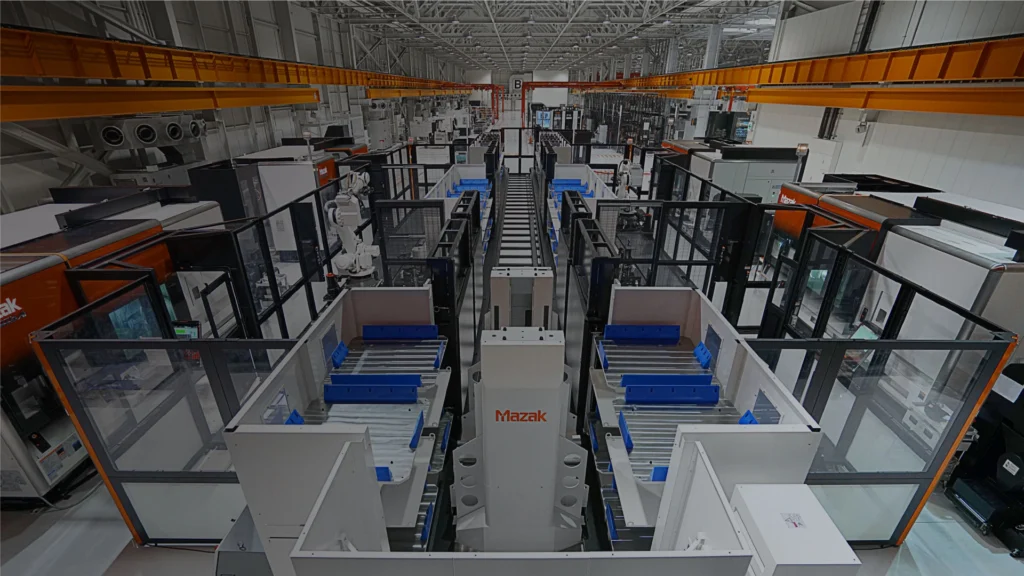
CNC machining serves as a core technology across all industries served, enabling manufacturers to produce complex components with high precision and repeatability. Whether machining lightweight structural components, high-strength alloys, or intricate housings, CNC systems provide the control necessary to maintain consistent results across low- to high-volume production.
Advanced CNC platforms support:
These capabilities are essential in industries where dimensional accuracy, surface finish, and reliability directly impact performance, safety, and compliance.
Automation plays a critical role across the industries served, particularly where high-mix, high-volume, or repeat production is required. Robotic loading systems, pallet changers, and unattended machining solutions help manufacturers increase spindle utilization while reducing manual handling and variability.
By integrating automation into CNC workflows, manufacturers can improve throughput, stabilize production schedules, and support lights-out manufacturing strategies. This approach is especially valuable in environments where labor availability, production scalability, and delivery performance are key operational priorities.
Digitally connected manufacturing systems support better visibility and control across production operations. CNC machines equipped with monitoring and data collection capabilities enable real-time performance tracking, predictive maintenance, and process optimization, supporting consistent output across industries with demanding quality standards.
Integration between CAD, CAM, and CNC control systems reduces the risk of errors between design and production. Digital simulation and verification tools allow machining strategies to be validated in advance, minimizing scrap and supporting efficient transitions from engineering to manufacturing.
Additive manufacturing supports a wide range of industrial applications, particularly in environments requiring rapid iteration, custom tooling, or low-volume production. Industrial 3D printing is commonly used to produce jigs, fixtures, workholding, and functional prototypes that improve machining efficiency and reduce lead times.
When combined with CNC machining, additive manufacturing enables hybrid workflows that balance design flexibility with tight tolerance requirements, supporting both development and production needs across multiple industries.
Quality requirements vary by industry, but consistency remains critical across all manufacturing environments. CNC systems with in-process inspection, probing, and digital documentation allow manufacturers to verify critical features during production and maintain traceability throughout the manufacturing process.
Embedding quality control directly into machining operations reduces rework, improves first-pass yield, and supports continuous improvement initiatives across regulated and non-regulated industries alike.
Manufacturers across aerospace, automotive, medical, consumer electronics, construction, and high-volume production environments require solutions that deliver precision, efficiency, and scalable performance. By leveraging CNC machining, automation, additive manufacturing, and digitally connected workflows, industrial operations can maintain consistent quality while adapting to evolving production demands. These technologies form the foundation of resilient manufacturing systems designed to support diverse industries and long-term operational success.