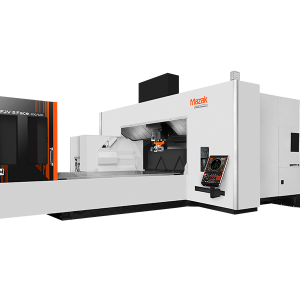
The Seibu America M25LP is a high-precision wire EDM built for stable, reliable cutting of complex and tight-tolerance components. It delivers consistent accuracy through a rigid machine structure, advanced motion control, and dependable thermal stability during extended cutting cycles. As a result, the M25LP supports predictable performance, fine surface finishes, and repeatable results in demanding production and toolroom environments.
The Seibu M25LP is a compact, high-precision CNC EDM machine made for cutting small, complex parts with consistent accuracy. Built for toolrooms and precision shops, this wire EDM for small parts handles intricate geometries with smooth, clean results. Its small footprint fits well in tight production spaces without sacrificing reliability or cutting quality.
You can choose the M25LP in a standard or oil-spec configuration. The oil wire EDM version boosts cutting stability for fine features, medical parts, and micro components. Oil dielectric helps reduce electrode wear and spark gap width. This allows the M25LP to create even finer detail and better surface finishes. That makes the oil-spec wire EDM setup ideal for work that demands tight heat control and high part quality.
The machine features Seibu’s Smart NC control and Automatic Wire Threading system. These tools help cut setup time and improve productivity. The CNC system adjusts cutting conditions in real time, whether using water or oil dielectric. As a toolroom wire EDM, the M25LP offers reliable results on repeat jobs. It’s a strong choice for shops that need a CNC EDM machine for small parts—especially where oil dielectric adds value for precision metal cutting EDM work.

| Standard Specifications | M25LP |
|---|---|
| Max. workpiece dimensions W×D×H |
10.63×10.63×3.94inch |
| Max. workpiece weight> | 330.69lb |
| Axis travel range X×Y×Z |
9.84×9.84×7.87inch |
| U-V axis travel U×V |
±1.38× ±1.38inch |
| Max. taper angle | ±10°/ 3.94inch |
| Dimensions W×D×H |
5.81×6.69×6.62ft |
| Weight | 6834.33lb |
| Control device | Smart NC |
|---|---|
| Input system | MDI, Ethernet, USB |
| Display | 21.5 inch TFT multi-touch screen |
| Axis controlled | 5 axis (simultaneously 4 axis) |
| Least input increment | 0.01µm |
| Least command increment | 0.01µm |
| Program memory capacity | 1GB |
| Power Supply | MPSC-20 |
|---|---|
| Input power source | 3-phase 200V/220V±10% 11 kVA, 50/60Hz |
| Weight | 352.74lb |
| Filtration device | MF330 |
|---|---|
| Tank capacity | 87.18gal |
| Filter element | 4 paper filters (internal-pressure type)×2 |
Wire diameter : Φ0.002 to Φ0.008inch
(Φ0.008inch is Standard.)
The Seibu America M25LP is a
oil-dielectric wire edm for precision dies, punches, miniature tooling, and
components where thermal stability and fine surface control are central to
the process. Its application is centered on oil dielectric machining with a
compact 250 x 250 mm X/Y work zone, giving manufacturers a process option for
components whose critical profiles must be produced without direct cutting
pressure from a conventional tool. A.W. Miller Technical Sales supports EDM
evaluation, process planning, installation, training, and service for
manufacturers throughout New York, Pennsylvania, Maryland, Delaware, Southern
New Jersey, and Quebec.
Selecting the M25LP should begin with the actual geometry rather
than travel alone. Workpiece size and thickness, material, smallest internal
radius, wire diameter, taper requirements, surface-finish target, feature
location tolerances, dielectric strategy, threading access, and expected
production volume all influence the final EDM process. The machine
configuration should be checked against the complete part family and
inspection plan before purchase.
Parts and processes commonly evaluated for the Seibu America M25LP
include:
Oil dielectric
operation is suited to applications where corrosion control, fine finishes,
and stable micro-feature machining are important.
The machine targets small, high-value work
where positioning control and access matter more than oversized
travel.
Wire size and dielectric choice affect corner radius, flushing,
cutting speed, recast behavior, and attainable finish. Those variables should
be established from the drawing and material rather than selected
independently.
Fine
geometry requires a stable relationship between wire guidance, threading
strategy, skim cuts, and inspection. Process development should account for
the smallest slot or radius as well as the surrounding feature
locations.
Oil dielectric is often
evaluated when the process calls for fine feature control, reduced corrosion
risk, and high-quality surfaces on small precision components. On the M25LP,
that process is paired with a compact 250 x 250 mm X/Y work zone for tightly
controlled tooling and component work.
The M25LP is most relevant when
a part combines small profiles, narrow slots, tight internal radii, or
closely related features within its compact work envelope. The drawing should
be reviewed for wire access, start-hole locations, workpiece thickness, and
the number of skim cuts required.
Wire diameter directly affects
the minimum internal radius, kerf width, cutting stability, and achievable
detail. Fine-wire work should be planned together with threading, flushing,
material thickness, and finish requirements rather than choosing wire size
from geometry alone.
Finish strategy matters when EDM
surfaces remain functional, become part of a sealing or mating feature, or
require minimal downstream polishing. Roughing and skim-cut sequences should
be established from the finish requirement and feature tolerance.
Review material compatibility,
workpiece preparation, cleaning requirements, feature size, finish target,
inspection method, and production rate. Those factors determine whether the
oil-dielectric process offers a practical advantage for the specific part.