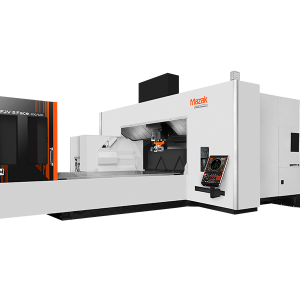
The Okamoto ACC-SA1 Series delivers high-precision surface grinding performance engineered for modern metalworking operations. This MDI Control surface grinder integrates a rigid machine structure with refined mechanical components to ensure consistent accuracy. Moreover, its robust construction enhances vibration control and long-term dimensional stability. The intuitive MDI control interface streamlines operation and simplifies setup procedures. As a result, the ACC-SA1 Series supports efficient workflow integration while maintaining tight tolerances and repeatable surface finishes across a wide range of industrial grinding applications.
ACC-SA1 Series Features:
| Max Cross Travel | 13.4" |
|---|---|
| Max Table Travel | 29.5" |
The Okamoto ACC-SA1 Series represents advanced surface grinding technology engineered for modern metalworking standards. These surface grinders incorporate double-V table ways to ensure smooth, accurate table movement. In addition, the fully supported table design eliminates overhang to maintain consistent precision on every pass. This structural stability enhances repeatability and surface finish quality across demanding applications.
Okamoto integrates user-friendly touchscreen controls to streamline grinding operations. As a result, setup procedures become faster and more efficient. Operators benefit from intuitive navigation and simplified parameter adjustments. Consequently, productivity increases while minimizing downtime during part changeovers. This design supports the fast-paced requirements of contemporary machining environments.
The ACC-SA1 Series includes a standard Over-the-Head Wheel Dresser with Dress Compensation. Therefore, the grinding wheel maintains optimal geometry throughout production cycles. This automated compensation improves surface consistency and dimensional accuracy. Moreover, it enhances overall process efficiency by reducing manual intervention.
Engineered for applications such as aerospace components and medical devices, the ACC-SA1 Series delivers the precision and reliability required in high-specification industries. As a result, these saddle-type surface grinders provide a dependable solution for machine shops focused on maximizing accuracy and operational performance.
Compare with other Okamoto Saddle Grinders for sale
| Max Cross Travel | 13.4" |
|---|---|
| Max Table Travel | 29.5" |
ACC-SA1 Series Specifications
*depending on model
The Okamoto ACC-SA1 Series is an MDI-controlled saddle-type surface grinder for manufacturers that need programmable grinding and dressing functions without moving to a full conversational CNC form-grinding platform. A.W. Miller Technical Sales supports manufacturers throughout New York, Pennsylvania, Maryland, Delaware, Southern New Jersey, and Quebec with applications engineering, installation, training, and service support.
The series combines a fully supported table, double-V ways, programmable dressing with automatic compensation, shift/plunge cycles, AC-driven vertical feed, servo-controlled crossfeed, and touchscreen MDI operation. It is particularly relevant where repeat setups and multi-pass surface grinding need tighter process control than a manual machine provides.
Applications commonly evaluated for the ACC-SA1 Series include:
Operators can enter grinding parameters, dressing data, and offsets directly through the touchscreen for repeatable job setup.
The control can account for wheel material removed during dressing so the grinding cycle maintains the intended relationship to the workpiece.
Closed-loop crossfeed supports programmed step grinding and repeated lateral positions.
The cycle supports efficient stock removal when the application benefits from controlled plunge-style infeed rather than conventional traverse grinding alone.
Manual Data Input allows the operator to enter grinding and dressing parameters through the control rather than positioning every movement manually. It provides automation while keeping setup direct and shop-floor oriented.
Programmable dressing can be paired with automatic dress compensation so the machine accounts for changes in wheel diameter within the grinding cycle.
Yes. Servo-controlled crossfeed and teach functions support repeatable lateral positions and automatic multi-pass routines when the part geometry and wheel clearance are suitable.
Shift/plunge cycles can increase removal efficiency on appropriate work by combining controlled infeed with lateral wheel positioning. Wheel loading, heat, and surface requirements still determine the practical cycle.
Shops with recurring precision work, repeated dressing requirements, multi-pass cycles, or operator-to-operator variation may benefit from the added programmability and closed-loop axis control.