Okamoto OGM 820UDXB Capabilities, Applications & Regional Support
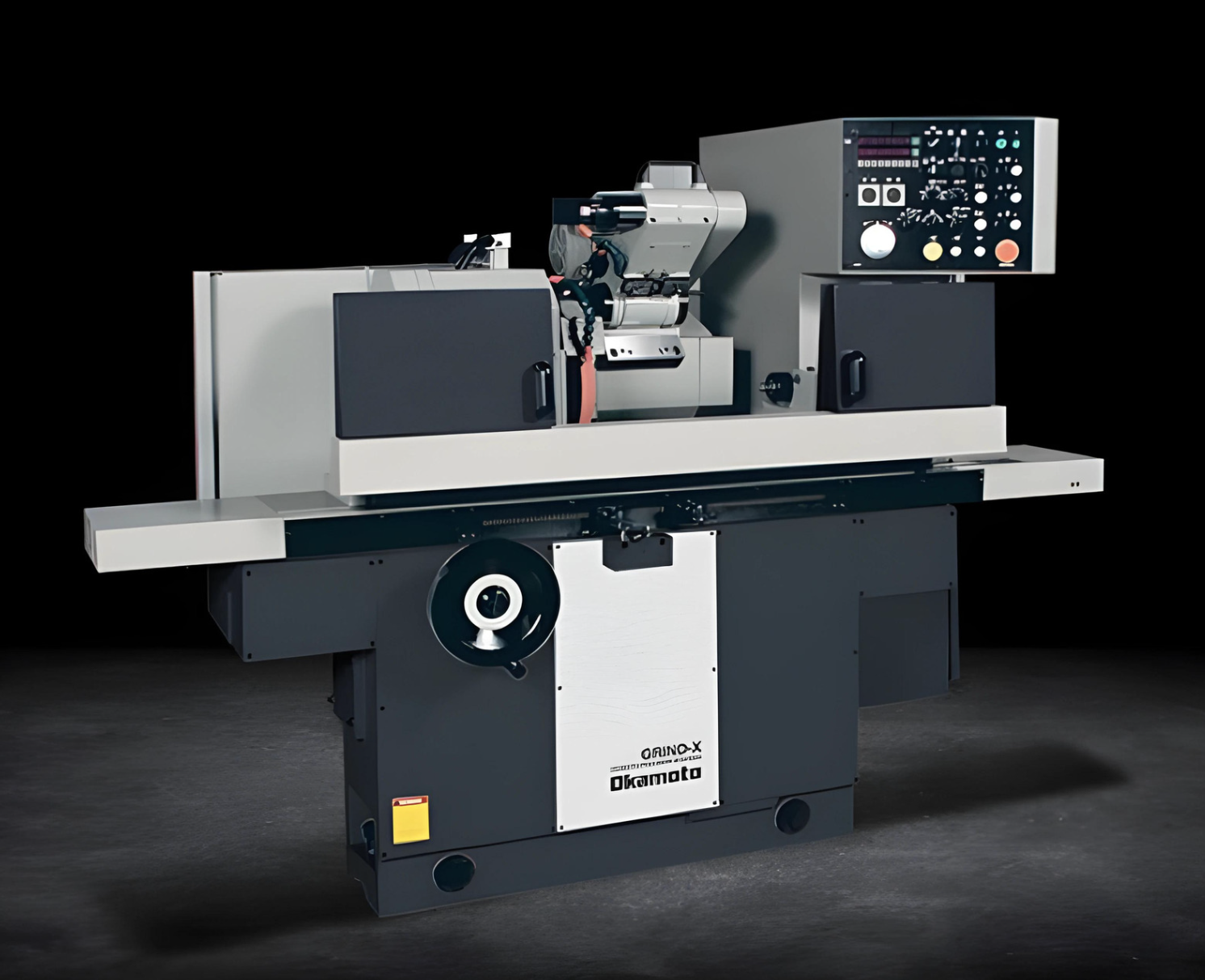
For shops evaluating straightforward precision OD grinding for recurring shaft and cylindrical work, the Okamoto OGM 820UDXB provides a automatic-control cylindrical grinder platform. The application should be sized from the finished feature requirements first, then checked against wheel reach, stock removal, dressing, coolant, and workholding constraints. As an authorized Okamoto distributor, A.W. Miller supports manufacturers across New York, Pennsylvania, Maryland, Delaware, Southern New Jersey, and Quebec with machine selection, process engineering, installation, training, and factory-certified service.
Process development on the OGM 820UDXB should account for how the wheel changes from roughing through finishing. Stock distribution, dress compensation, spark-out, thermal stability, workholding stiffness, and measurement strategy all affect whether the required geometry can be repeated in production.
Applications
Parts and processes commonly evaluated for the Okamoto OGM 820UDXB include:
- shafts
- pins
- rollers
- bearing journals
Why Manufacturers Choose the Okamoto OGM 820UDXB
Automatic Cylindrical Cycles
The OGM 820UDXB provides an automatic-control alternative for conventional OD grinding where repeatable cycle execution is the primary requirement.
Production-Oriented Simplicity
Its role in the OGM family is centered on dependable cylindrical grinding without the broader CNC process complexity of the NCIII platforms.
Conventional Shaft Workholding
Centers, chucking, tailstock support, and appropriate rests can be selected around the geometry and stiffness of the component.
Process-Driven Accuracy
Wheel condition, work support, coolant, stock allowance, and spark-out strategy remain central to size, roundness, and finish on recurring OD work.

 This product has multiple variants. The options may be chosen on the product page
 This product has multiple variants. The options may be chosen on the product page
 This product has multiple variants. The options may be chosen on the product page
 This product has multiple variants. The options may be chosen on the product page