19 May How Multi-Tasking CNC Machines Reduce Setup Time and Increase Throughput
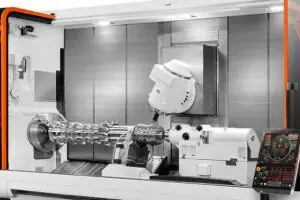
Manufacturers today face constant pressure to produce more parts in less time while maintaining tighter tolerances and reducing labor costs. As production demands increase and skilled labor shortages continue affecting the industry, many machine shops are turning to multi-tasking CNC machines to improve efficiency and stay competitive.
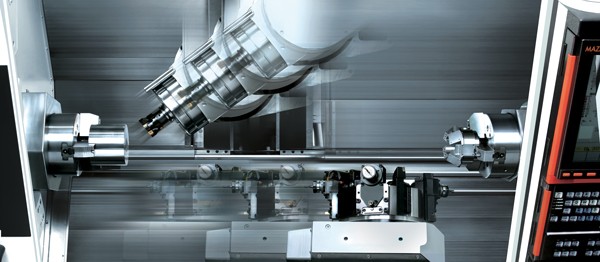
Multi-tasking CNC machines combine multiple machining operations into a single platform, allowing manufacturers to complete complex parts in fewer setups. Instead of moving parts between separate lathes, mills, drilling stations, and finishing equipment, these advanced systems perform multiple operations in one continuous process.
For manufacturers producing complex or high-precision components, multi-tasking CNC technology can dramatically reduce setup time, improve accuracy, and increase overall throughput.
What Is a Multi-Tasking CNC Machine?
A multi-tasking CNC machine integrates several machining functions into one machine tool. Depending on the configuration, these systems may combine:
- Turning
- Milling
- Drilling
- Tapping
- Boring
- Gear cutting
- Simultaneous 5-axis machining
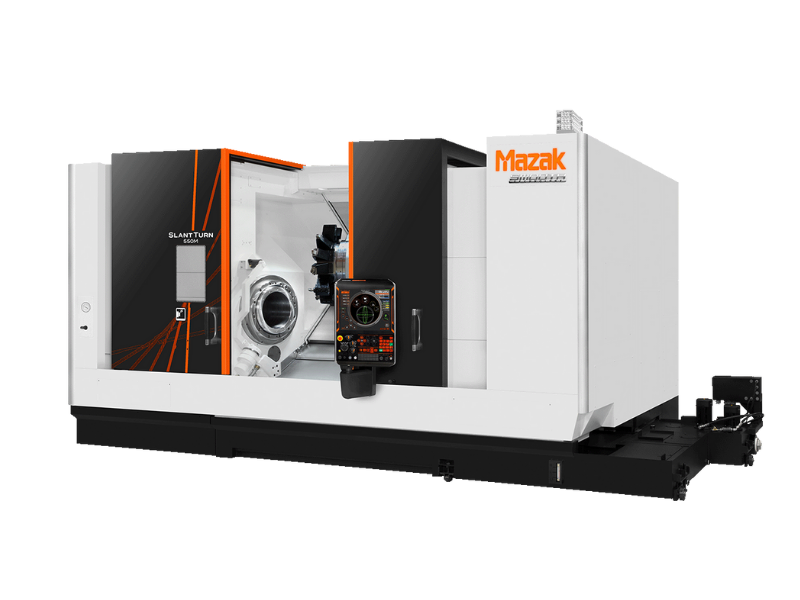
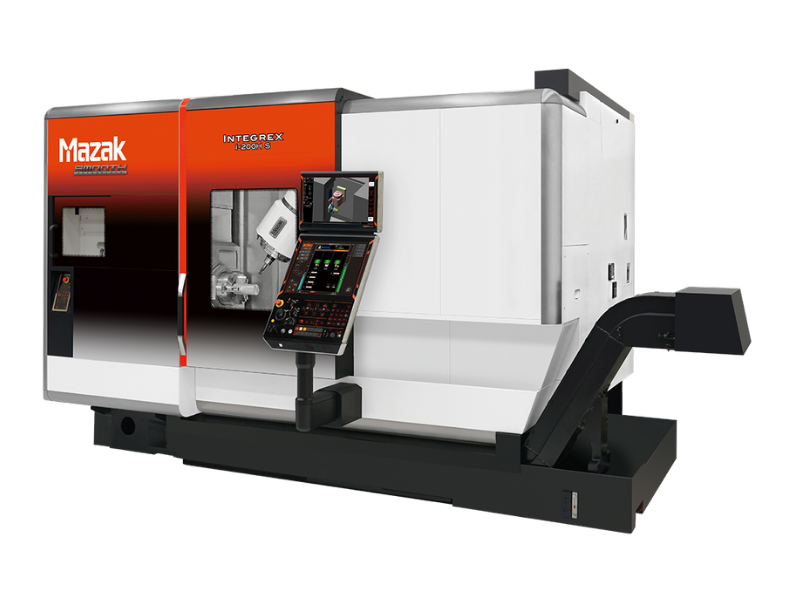
Machines such as the Mazak INTEGREX Series are designed around “DONE IN ONE®” manufacturing principles, allowing operators to complete parts in a single setup instead of requiring multiple machines and transfers throughout the shop floor.
This approach significantly improves workflow efficiency while reducing production bottlenecks.
How Multi-Tasking CNC Machines Reduce Setup Time
Consolidating Multiple Operations Into One Machine
Traditional machining processes often require several separate setups:
- Turning on a lathe
- Moving the part to a machining center
- Re-fixturing for drilling or tapping
- Secondary finishing operations
Each setup introduces:
- Additional labor
- Alignment verification
- Fixture changes
- Downtime between operations
- Potential dimensional variation
Multi-tasking CNC machines eliminate much of this inefficiency by performing all operations in one cycle.
For example, the Mazak INTEGREX i-500 AG combines turning, milling, and gear machining into a single system, reducing the need for multiple setups and separate machines.
View Mazak INTEGREX i-500 AG Brochure
Reducing Part Handling
Every time a part is removed and re-clamped, manufacturers risk introducing positioning errors or damaging precision surfaces. Multi-tasking machines minimize handling by keeping the part secured throughout the machining process.
This provides several advantages:
- Improved repeatability
- Better concentricity
- Reduced scrap rates
- Faster inspection processes
- Greater dimensional consistency
For aerospace, medical, and high-precision manufacturing applications, reducing handling is critical for maintaining tight tolerances.
Faster Changeovers
Modern multi-tasking machines are designed with advanced tool changers, automation integration, and intelligent CNC controls that streamline changeovers between operations.
Systems such as the Mazak INTEGREX i-800V support:
- Simultaneous 5-axis machining
- Integrated turning and milling
- Automation-ready configurations
- Reduced setup and cycle times
As a result, manufacturers can move from one part or operation to another more efficiently while minimizing machine downtime.
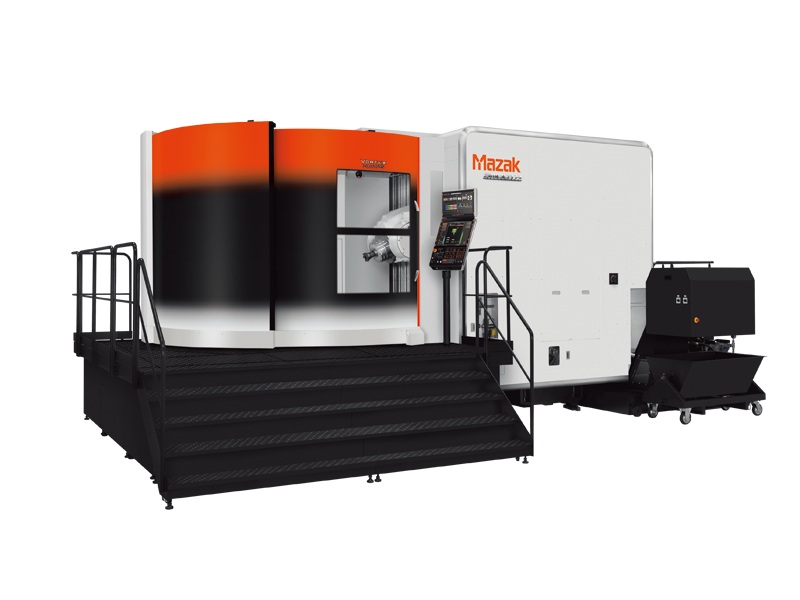
Integrex e-V-Vortex e-V-10-2024 Brochure
How Multi-Tasking CNC Machines Increase Throughput
Continuous Machining Improves Productivity
One of the biggest advantages of multi-tasking CNC equipment is continuous processing. Rather than waiting in queues between departments or machines, parts move through the entire production cycle in one uninterrupted process.
This reduces:
- Idle machine time
- Work-in-progress inventory
- Transportation delays
- Scheduling bottlenecks
The result is significantly higher throughput and shorter lead times.
Supporting Lights-Out Manufacturing
Many modern multi-tasking CNC systems are built to integrate with automation technologies such as:
- Robotic loading systems
- Bar feeders
- Pallet changers
- In-process probing systems
This allows manufacturers to run unattended or “lights-out” production during nights and weekends, maximizing spindle utilization and machine uptime.
Automation-ready systems like the Mazak INTEGREX i-100H help manufacturers increase production capacity without adding labor.
View MAZAK INTEGREX i-100H Brochure
Improving Accuracy and Reducing Rework
When multiple machining operations occur in a single setup, manufacturers reduce the accumulation of tolerance stack-up caused by repeated repositioning.
This leads to:
- Higher first-pass yield
- Less rework
- Lower scrap costs
- Faster quality control processes
For high-value components, reducing rework alone can create significant cost savings and production gains.
Industries Benefiting From Multi-Tasking CNC Machines
Multi-tasking machining technology is especially valuable in industries requiring precision, complex geometries, and efficient production workflows.
Aerospace Manufacturing
Aerospace manufacturers rely on multi-tasking CNC systems for:
- Complex turbine components
- Tight-tolerance structural parts
- High-performance alloys
- Reduced setup variation
Medical Device Manufacturing
Medical manufacturers benefit from:
- Improved precision
- Better repeatability
- Reduced contamination risk from excessive handling
- Efficient production of small complex parts
Automotive Manufacturing
Automotive suppliers use multi-tasking CNC technology to:
- Increase production speed
- Improve consistency
- Reduce labor requirements
- Streamline high-volume manufacturing
The ROI of Multi-Tasking CNC Technology
Although multi-tasking CNC machines require a larger upfront investment, many manufacturers see substantial long-term returns through:
- Reduced labor costs
- Faster setup times
- Improved spindle utilization
- Lower scrap rates
- Increased production throughput
- Fewer machines required on the shop floor
By consolidating multiple operations into one machine, manufacturers can produce more parts with fewer resources while maintaining higher quality standards.
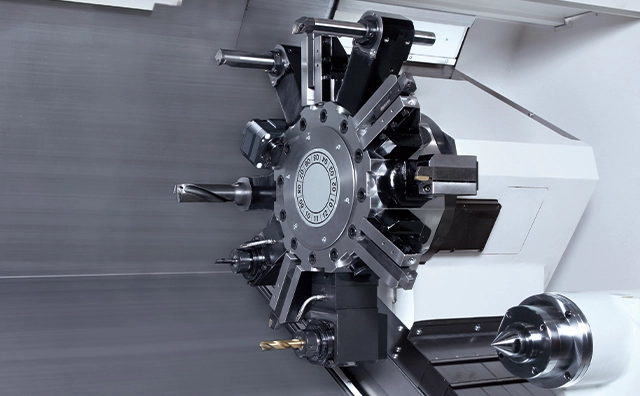
Why Manufacturers Are Adopting “DONE IN ONE®” Manufacturing
As manufacturers continue facing tighter deadlines, rising labor costs, and increased competition, process efficiency has become a major differentiator.
Multi-tasking CNC machines allow shops to:
- Reduce non-cutting time
- Eliminate unnecessary setups
- Increase throughput
- Improve part accuracy
- Simplify production workflows
Solutions like the Mazak INTEGREX product line from A.W. Miller are helping manufacturers modernize operations and maximize productivity through advanced multi-tasking machining technology.
For shops focused on precision manufacturing, shorter lead times, and scalable production, multi-tasking CNC systems are quickly becoming an essential investment rather than a competitive luxury.


Sorry, the comment form is closed at this time.